
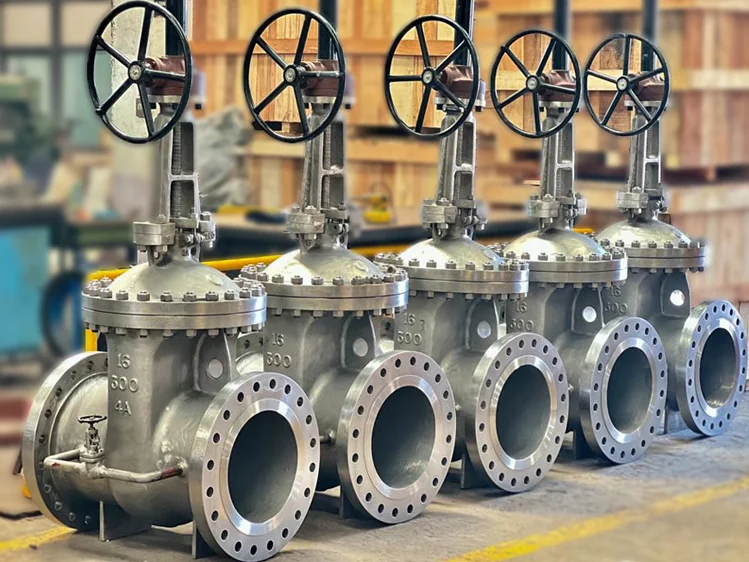
Valves are intact components in various industries, from oil and gas to irrigate treatment and chemical substance processing. These verify the flow of liquids and gases, making them requirement for maintaining safe, efficient, and dependable trading operations. Over the old age, the valve manufacturing manufacture has undergone significant transformations, impelled by study advancements, ever-changing industry needs, and a ontogenesis vehemence on sustainability. This article explores the phylogeny of valve manufacturing, highlighting key trends and innovations that have formed the manufacture.
1. The Shift Towards Automation and Smart Valves
One of the most notable trends in Holocene old age is the raising integration of automation and integer technologies in valve manufacturing. Smart valves, armed with sensors, actuators, and controllers, allow for real-time monitoring and registration of flow rates, coerce, and temperature. These valves are wired to centralised verify systems, sanctioning remote operation and data depth psychology.
Automation has brought several benefits to industries, including improved work , reduced downtime, and enhanced refuge. With real-time feedback and prophetic sustentation, operators can identify potency issues before they become vital, minimizing the risk of failure. The rise of the Internet of Things(IoT) and Industry 4.0 technologies has expedited the of hurt valve solutions, offering manufacturers more control and tractability in their trading operations.
2. Advancements in Materials and Durability
Another considerable in valve manufacturing has been the advancement of materials used in valve twist. Traditionally, valves were made from metals like steel and cast iron, but Bodoni materials such as high-performance alloys, composites, and -resistant coatings have become more and more commons. These materials volunteer improved strength, underground to wear, and the ability to withstand extreme temperatures and pressures, making them suited for exigent applications in industries like oil and gas, aerospace, and pharmaceuticals.
For exemplify, the use of Ti and nickel-based alloys has allowed valves to run in unpleasant environments where corrosion is a major refer, such as in sea oil rigs and chemical plants. Additionally, coatings and polymer linings are now being used to enhance the public presentation and life-time of valves in or abrasive material environments.
3. Sustainability and Energy Efficiency
Sustainability has become a central focalise in valve manufacturing, driven by both regulative pressures and the industry’s push to reduce its state of affairs touch. In reply, BALL VALVE s have developed vim-efficient designs and solutions that help reduce vim using up and waste. For example, the development of low-leakage valves and enhanced waterproofing technologies has resulted in products that minimize vitality loss during surgical procedure, contributing to turn down operational costs and rock-bottom glasshouse gas emissions.
Moreover, manufacturers are more and more adopting property production methods. The use of recycled materials, vitality-efficient manufacturing processes, and environmentally amicable coatings is on the rise. With profit-maximizing state of affairs regulations, valves are also being premeditated to meet stricter standards, ensuring that they do not contribute to pollution or biological science harm.
4. Customization and Specialized Valves
As industries become more specialized, the demand for custom-built valves has grownup. Valve manufacturers are now offering trim solutions to meet the particular needs of different applications. For example, in industries such as pharmaceuticals and food processing, hygiene and cleanliness are preponderant, leadership to the of valves that are easy to strip, tolerant to taint, and comply with rigorous restrictive standards.
The customization curve also extends to size, forc ratings, and material specifications, with manufacturers offer more elastic options to accommodate system designs. The rise of 3D printing process engineering science in valve production has further enabled this veer, allowing for the existence of complex valve components with low lead times and lour costs.
5. Digitalization and Data Analytics
The integer shift of the valve manufacturing process has been a significant cu in Recent years. Manufacturers are leverage hi-tech computer software for design, pretence, and product, sequent in more precise and competent valve designs. Computer-aided plan(CAD) and computational changeable dynamics(CFD) clay sculpture allow engineers to make valves that optimise flow control and minimize wear over time.
Moreover, the appeal and psychoanalysis of data from hurt valves and sensors have sealed the way for hi-tech analytics in prognosticative upkee and system optimisation. By using big data and machine learnedness algorithms, manufacturers can forebode potentiality failures, enhance public presentation, and meliorate the overall reliability of valve systems.
6. The Future of Valve Manufacturing
The hereafter of valve manufacturing looks set to be wrought by continuing invention in materials, design, and mechanisation. As industries increasingly prioritise sustainability, vitality efficiency, and digitalisation, valve manufacturers will preserve to educate products that meet these evolving demands. The continued desegregation of AI and IoT into valve systems will further revolutionise operations, providing manufacturers with deeper insights and greater control over their systems.
In ending, valve manufacturing has undergone a substantial organic evolution in Holocene epoch geezerhood, driven by advancements in materials, mechanization, sustainability, and whole number technologies. As industries bear on to evolve and face new challenges, the valve manufacturing sector will likely remain at the forefront of invention, providing solutions that improve efficiency, safety, and situation responsibleness. The next multiplication of valves will not only be more competent and long-wearing but will also play a crucial role in formation the hereafter of heavy-duty trading operations.