
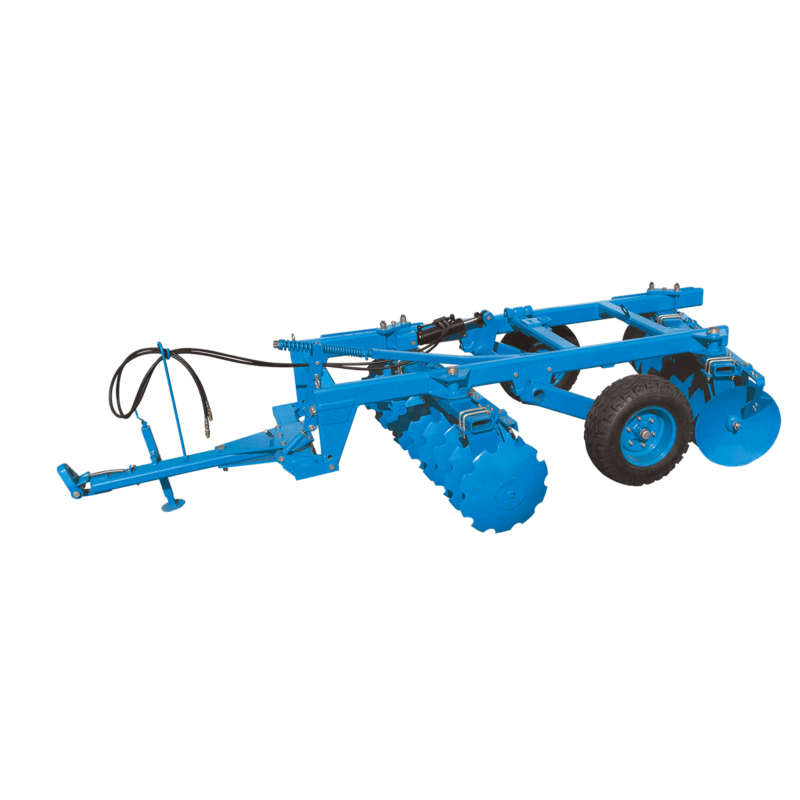
Agriculture has always been the backbone of civilization, but the tools used to cultivate land and harvest crops have drastically changed over time. From rudimentary hand tools to today’s advanced precision farming equipment, the evolution of farm machinery tells the story of human innovation and our quest to increase productivity, reduce labor, and steward the land more effectively. Rotary Tiller.
The journey began with simple implements like wooden plows pulled by oxen or horses. These early tools were effective in breaking ground but were labor-intensive and slow. The 18th and 19th centuries ushered in a wave of agricultural advancements, sparked by the Industrial Revolution. The development of the steel plow by John Deere in 1837 was a game-changer. Unlike its wooden predecessors, the steel plow could slice through tough soil without clogging, significantly increasing efficiency for farmers working the American Midwest's rich but heavy earth.
As steam power gained popularity, it was soon applied to agriculture. By the late 1800s, steam tractors were introduced, capable of pulling larger plows and other heavy equipment. While massive and difficult to maneuver, these early machines paved the way for internal combustion engines, which would dominate the 20th century.
The gasoline-powered tractor, introduced in the early 1900s, revolutionized farming. Lightweight, versatile, and more reliable than their steam predecessors, these machines quickly became essential. Companies like Ford, International Harvester, and John Deere competed to innovate further, developing tractors and implements that could plant, cultivate, and harvest crops with increasing ease.
Mechanization transformed farm life, reducing the reliance on human and animal labor. Harvesters, combines, and balers enabled farmers to manage larger plots of land and produce higher yields with less physical strain. By the mid-20th century, most commercial farms in industrialized nations had become highly mechanized.
In recent decades, farming has entered the digital age. Precision agriculture, powered by GPS, sensors, drones, and data analytics, allows farmers to apply water, fertilizer, and pesticides with pinpoint accuracy. Tractors and harvesters equipped with GPS-guided steering systems can operate autonomously, reducing overlap and fuel usage while improving crop yield.
Even more revolutionary is the use of artificial intelligence and robotics. Smart sensors can monitor soil conditions, crop health, and even predict pest infestations. Autonomous drones scout fields, collect data, and even assist in spraying treatments. This level of precision not only boosts efficiency but also helps reduce environmental impact by minimizing waste and overuse of chemicals.
Today’s farm equipment is a far cry from the simple plow, yet each innovation builds on the legacy of those early tools. As climate change, population growth, and sustainability concerns challenge modern agriculture, the ongoing evolution of farm equipment will continue to play a critical role in feeding the world.
From plow to precision, the story of farm equipment is one of constant progress, driven by the need to do more with less—less time, less labor, and fewer resources. And as technology continues to evolve, so too will the tools that help feed our future.